Skip to content

lmlib.utils.generator

Functions:

  • gen_sine

    Generates multiple sinusoidal signals and adds them to one

  • gen_exp

    Exponentially decaying signal generator

  • gen_rect

    Rectangular (pulse wave) signal generator

  • gen_saw

    Sawtooth signal generator

  • gen_tri

    Triangular signal generator

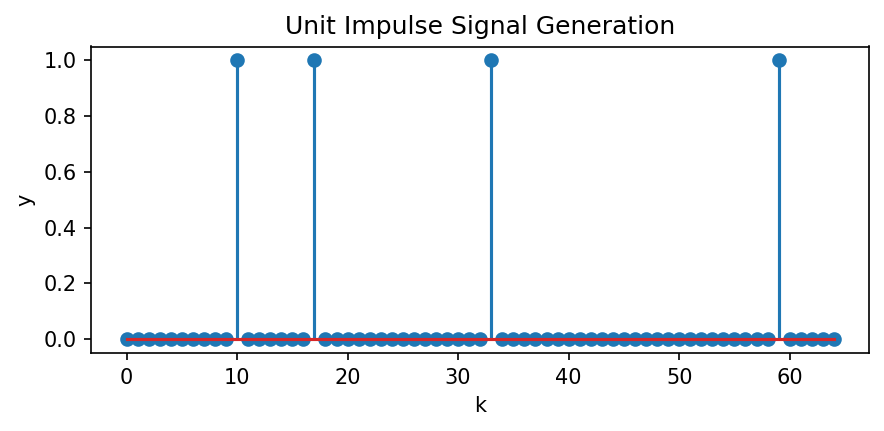
  • gen_pulse

    Pulse signal generator

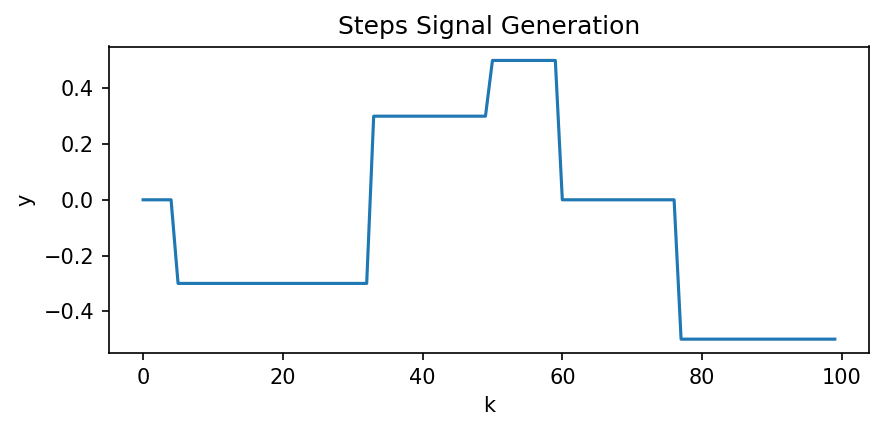
  • gen_steps

    Step signal generator

  • gen_slopes

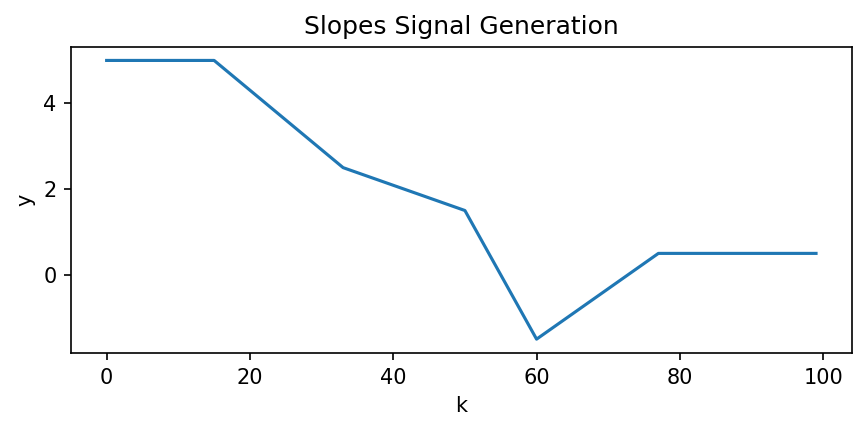
    Slopes signal generator

  • gen_wgn

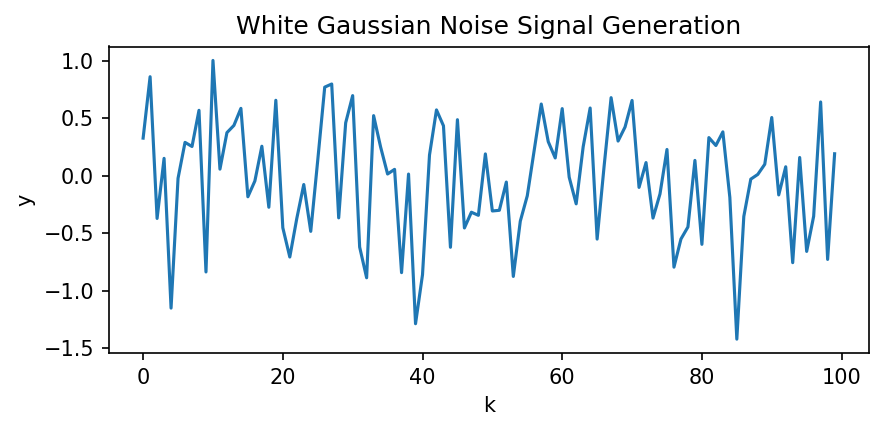
    White Gaussian noise signal generator

  • gen_rand_walk

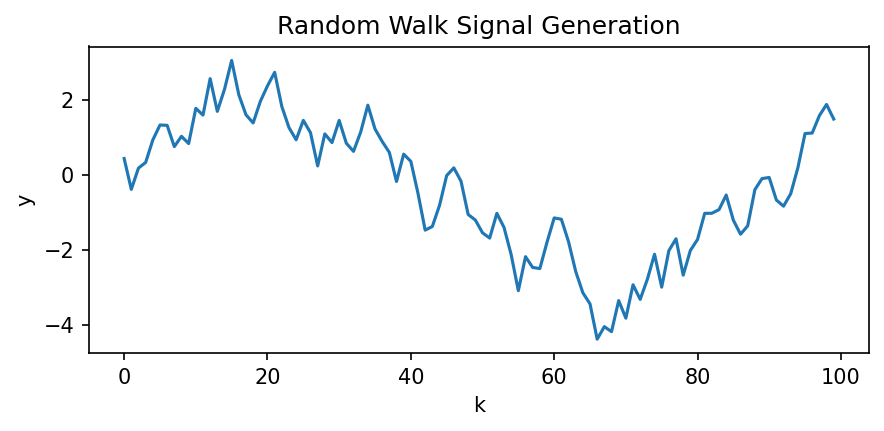
    Random walk generator

  • gen_rand_pulse

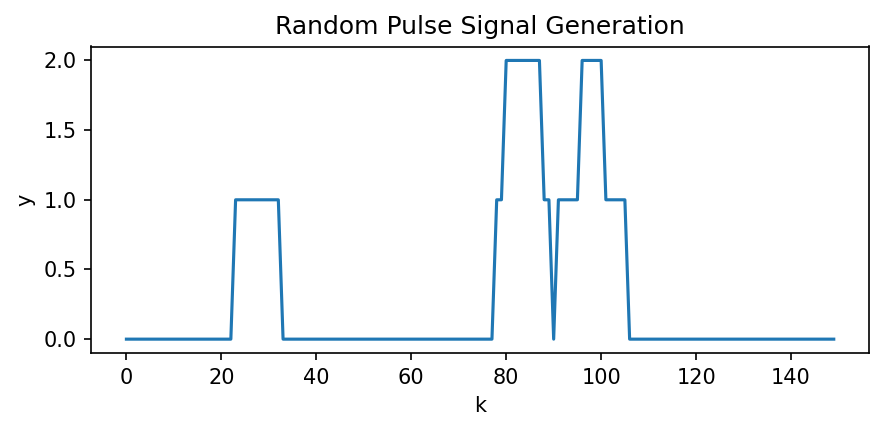
    Random pulse signal generator

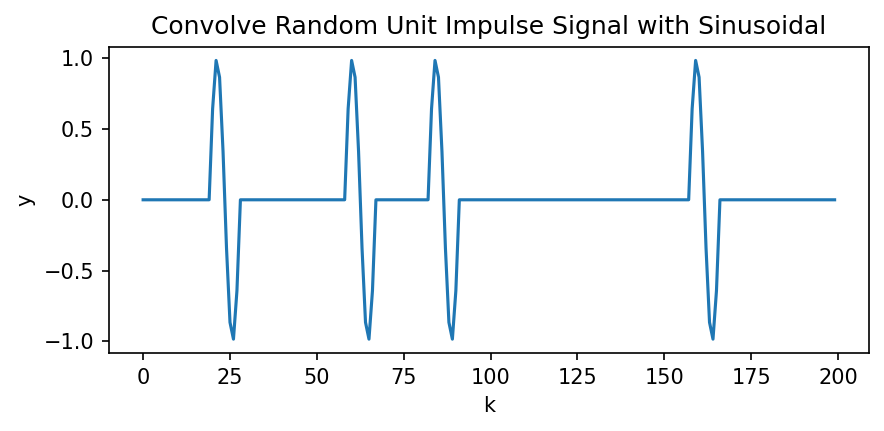
  • gen_conv

    Convolves two signals. The output signal shape (number of channels and signal length) is preserved from the base signal.

  • load_data

    Loads a single channel signal from the signal catalog, see biosignals_catalog.

  • load_data_mc

    Loads a multi-channel signal from the signal catalog, see biosignals_catalog.

  • k_period_to_omega

    Converts sample base period (samples per cycle) to the normalized frequency

  • load_csv

    loads csv data as a single-channel data shape

  • load_csv_mc

    loads csv data as a multi-channel data shape

  • load_lib_csv

    loads a library-internal csv data file from the signal catalog as a single-channel data shape

  • load_lib_csv_mc

    loads a library-internal csv data file from the signal catalog as a multi-channel data shape

Functions

gen_sine

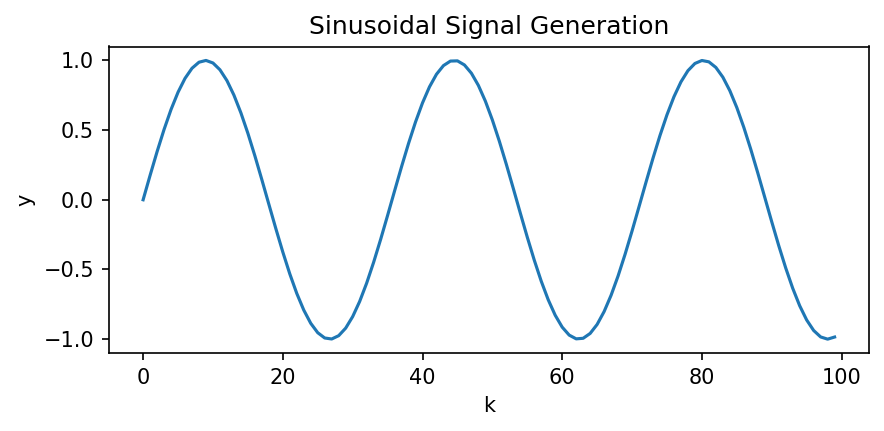
gen_sine(K, k_periods, amplitudes=None, k0s=None)

Generates multiple sinusoidal signals and adds them to one

Parameters:

  • K (int) –

    Signal length

  • k_periods (int or array_like of int) –

    signal periodicity in number of samples per period.

  • amplitudes (scalar, array_like of scalars, default: None ) –

    amplitude(s) of a signal, if set to None all amplitudes are set to 1.0

  • k0s (int or array_like of int, default: None ) –

    time index(es) of first zero-crossing of sinusoidal signal, if set to None all k0s are set to 1.0

Returns:

  • out ( ndarray ) –

    Sum of Sinusoidal signals of length K.

Example
Sinusoidal Signal

import matplotlib.pyplot as plt
from lmlib.utils.generator import *

K = 100
y = gen_sine(K, k_periods=36, k0s=0)

fig, ax = plt.subplots(figsize=(6, 3))
ax.set(xlabel='k', ylabel='y', title='Sinusoidal Signal Generation')
ax.plot(range(K), y)

plt.tight_layout()
plt.show()
Source code in lmlib/utils/generator.py
def gen_sine(K, k_periods, amplitudes=None, k0s=None):
    r"""
    Generates multiple sinusoidal signals and adds them to one

    Parameters
    ----------
    K : int
        Signal length
    k_periods : int or array_like of int
        signal periodicity in number of samples per period.
    amplitudes : scalar, array_like of scalars, optional
        amplitude(s) of a signal, if set to None all amplitudes are set to 1.0
    k0s : int or array_like of int, optional
        time index(es) of first zero-crossing of sinusoidal signal, if set to None all k0s are set to 1.0

    Returns
    -------
    out : ndarray
        Sum of Sinusoidal signals of length **K**.

    Example
    -------
    ![Sinusoidal Signal](../_generated/catalog/generators/example-gen_sinusoidal_plot.png)

    ```python
    --8<-- "catalog/generators/example-gen_sinusoidal_plot.py:5"
    ```
    """

    if np.isscalar(k_periods):
        amplitudes = 1.0 if amplitudes is None else amplitudes
        k0s = 0.0 if k0s is None else k0s
        assert np.isscalar(amplitudes), 'Not matching type, excpected scalar)'
        assert np.isscalar(k0s), 'Not matching type, excpected scalar)'

        return amplitudes * np.sin(2 * np.pi * (np.linspace(0, K / k_periods, K) + k0s / k_periods))
    elif is_array_like(k_periods):
        amplitudes = np.ones_like(k_periods) if amplitudes is None else amplitudes
        k0s = np.zeros_like(k_periods) if k0s is None else k0s
        assert len(k_periods) == len(amplitudes), 'amplitudes length does not match'
        assert len(k_periods) == len(k0s), 'k0s length does not match'

        out = np.zeros(K)
        for kp, a, k0 in zip(k_periods, amplitudes, k0s):
            out += a * np.sin(2 * np.pi * (np.linspace(0, K / kp, K) + k0 / kp))
        return out
    else:
        assert False, 'k_periods has wrong type'

gen_exp

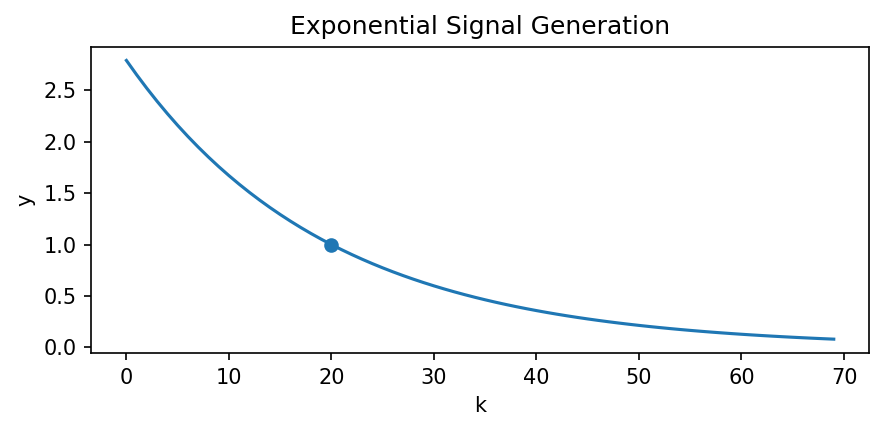
gen_exp(K, decay, k0=0)

Exponentially decaying signal generator

\(y_k = \gamma^{k-k_0}\)

Parameters:

  • K (int) –

    Signal length

  • decay (float) –

    decay factor \(\gamma\)

  • k0 (int, default: 0 ) –

    index shift \(k_0\); it follows that \(y_{k_0} = 1\)

Returns:

  • out ( ndarray ) –

    Returns an exponential decaying signal of length K, normalized to 1 at index k0.

Example
Exponential Signal

import matplotlib.pyplot as plt
from lmlib.utils.generator import *

K = 70
decay = 0.95
k = 20
y = gen_exp(K, decay, k)

fig, ax = plt.subplots(figsize=(6, 3))
ax.set(xlabel='k', ylabel='y', title='Exponential Signal Generation')
ax.plot(range(K), y)
ax.scatter(k, y[k])

plt.tight_layout()
plt.show()
Source code in lmlib/utils/generator.py
def gen_exp(K, decay, k0=0):
    r"""
    Exponentially decaying signal generator

    $y_k = \gamma^{k-k_0}$

    Parameters
    ----------
    K : int
        Signal length
    decay : float
        decay factor $\gamma$
    k0 : int
        index shift $k_0$; it follows that $y_{k_0} = 1$

    Returns
    -------
    out : ndarray
        Returns an exponential decaying signal of length **K**, normalized to 1 at index **k0**.

    Example
    -------
    ![Exponential Signal](../_generated/catalog/generators/example-gen_exponential_plot.png)

    ```python
    --8<-- "catalog/generators/example-gen_exponential_plot.py:5"
    ```
    """
    return np.power(decay, np.arange(0 - k0, K - k0))

gen_rect

gen_rect(K, k_period, k_on=None, duty_cycle=None, k0=0)

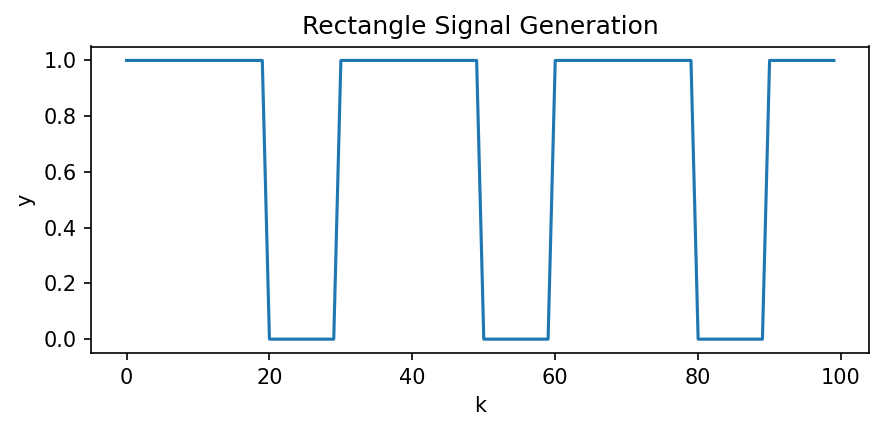
Rectangular (pulse wave) signal generator

Parameters:

  • K (int) –

    Signal length

  • k_period

    periodicity, number of samples per period

  • k_on (int, default: None ) –

    Number of samples of value 1, followed by k_period-k_on samples of value 0. Default is k_period//2 (only k_on or duty_cycle can be used)

  • duty_cycle (float, default: None ) –

    Duty Cycle of a period (starts with 1). Default is k_period//2 (only k_on or duty_cycle can be used)

  • k0 (int, default: 0 ) –

    Start shift of a period, default k0=0

Returns:

  • out ( ndarray, shape=(K,) ) –

    Returns a rectangular wave signal of length K.

Example
Rectangle Signal

import matplotlib.pyplot as plt
from lmlib.utils.generator import *

K = 100
y = gen_rect(K, k_period=30, k_on=20)

fig, ax = plt.subplots(figsize=(6, 3))
ax.set(xlabel='k', ylabel='y', title='Rectangle Signal Generation')
ax.plot(range(K), y)

plt.tight_layout()
plt.show()
Source code in lmlib/utils/generator.py
def gen_rect(K, k_period, k_on=None, duty_cycle=None, k0=0):
    r"""
    Rectangular (pulse wave) signal generator

    Parameters
    ----------
    K : int
        Signal length
    k_period: int
        periodicity, number of samples per period
    k_on : int, optional
        Number of samples of value 1, followed by **k_period**-**k_on** samples of value 0. Default is k_period//2 (only k_on or duty_cycle can be used)
    duty_cycle : float, optional
        Duty Cycle of a period (starts with 1). Default is k_period//2 (only k_on or duty_cycle can be used)
    k0 : int, optional
        Start shift of a period, default k0=0

    Returns
    -------
    out : ndarray, shape=(K,)
        Returns a rectangular wave signal of length `K`.

    Example
    -------
    ![Rectangle Signal](../_generated/catalog/generators/example-gen_rectangle_plot.png)

    ```python
    --8<-- "catalog/generators/example-gen_rectangle_plot.py:5"
    ```
    """

    assert k_on is None or duty_cycle is None, "Set only k_on or duty_cycle. These cannot be used at the same time."
    if k_on is None:
        k_on = k_period // 2 if duty_cycle is None else int(k_period * duty_cycle)
        assert k_on <= k_period, "duty_cycle not in range from 0 to 1"

    assert k_on <= k_period, "k_on must be smaller equal than k_period."

    out = np.zeros(K, )
    for p in np.arange(-(k0 % k_period), K, k_period):
        p_range = np.arange(p, min(p + k_on, K))
        out[p_range] = np.ones((p_range.size,))
    return out

gen_saw

gen_saw(K, k_period)

Sawtooth signal generator

Parameters:

  • K (int) –

    Signal length

  • k_period

    periodicity, number of samples per period

Returns:

  • out ( ndarray, shape=(K,) ) –

    Returns a repetitive slope signal of length K. Amplitudes are normalize from 0 to 1.

Source code in lmlib/utils/generator.py
def gen_saw(K, k_period):
    r"""
    Sawtooth signal generator

    Parameters
    ----------
    K : int
        Signal length
    k_period: int
        periodicity, number of samples per period

    Returns
    -------
    out : ndarray, shape=(K,)
        Returns a repetitive slope signal of length **K**. Amplitudes are normalize from 0 to 1.
    """
    return np.remainder(range(K), k_period) / k_period - 0.5

gen_tri

gen_tri(K, k_period)

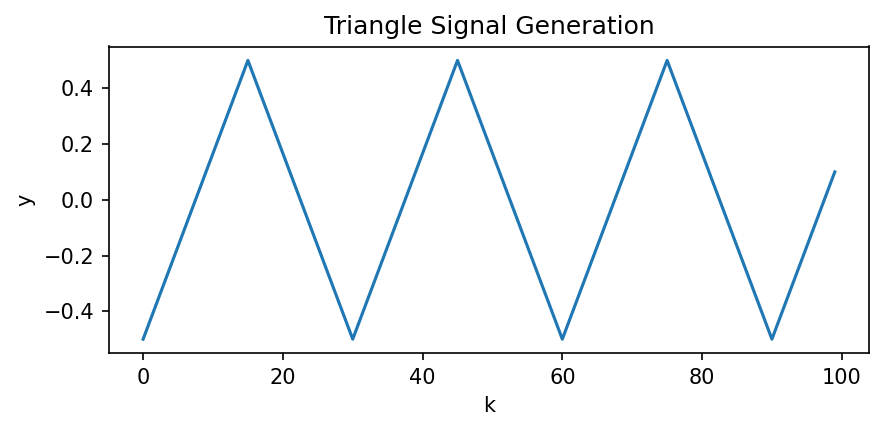
Triangular signal generator

Parameters:

  • K (int) –

    Signal length

  • k_period

    periodicity, number of samples per period

Returns:

  • out ( ndarray, shape=(K,) ) –

    Returns a triangular signal of length K with k_period samples per triangle. Amplitudes aer normalize from 0 to 1.

Example
Triangle Signal

import matplotlib.pyplot as plt
from lmlib.utils.generator import *

K = 100
y = gen_tri(K, k_period=30)

fig, ax = plt.subplots(figsize=(6, 3))
ax.set(xlabel='k', ylabel='y', title='Triangle Signal Generation')
ax.plot(range(K), y)

plt.tight_layout()
plt.show()
Source code in lmlib/utils/generator.py
def gen_tri(K, k_period):
    r"""
    Triangular signal generator

    Parameters
    ----------
    K : int
        Signal length
    k_period: int
        periodicity, number of samples per period

    Returns
    -------
    out : ndarray, shape=(K,)
        Returns a triangular signal of length **K** with **k_period** samples per triangle. Amplitudes aer normalize from 0 to 1.

    Example
    -------
    ![Triangle Signal](../_generated/catalog/generators/example-gen_triangle_plot.png)

    ```python
    --8<-- "catalog/generators/example-gen_triangle_plot.py:5"
    ```
    """
    return 1 - abs(np.remainder(range(K), k_period) - 0.5 * k_period) / (0.5 * k_period) - 0.5

gen_pulse

gen_pulse(K, ks)

Pulse signal generator

Parameters:

  • K (int) –

    Signal length

  • ks (list) –

    Time indices of unit impulses

Returns:

  • out ( ndarray, shape=(K,) ) –

    Returns a unit impulse signal trail of length K with values at indices ks set to 1, all others to 0.

Example
Unit Impulse Signal

import matplotlib.pyplot as plt
from lmlib.utils.generator import *

K = 65
y = gen_pulse(K, ks=[10, 17, 59, 33])

fig, ax = plt.subplots(figsize=(6, 3))
ax.set(xlabel='k', ylabel='y', title='Unit Impulse Signal Generation')
ax.stem(range(K), y)

plt.tight_layout()
plt.show()
Source code in lmlib/utils/generator.py
def gen_pulse(K, ks):
    r"""
    Pulse signal generator

    Parameters
    ----------
    K : int
        Signal length
    ks : list
        Time indices of unit impulses

    Returns
    -------
    out : ndarray, shape=(K,)
        Returns a unit impulse signal trail of length **K** with values at indices **ks** set to 1, all others to 0.

    Example
    -------
    ![Unit Impulse Signal](../_generated/catalog/generators/example-gen_pulse_plot.png)

    ```python
    --8<-- "catalog/generators/example-gen_pulse_plot.py:5"
    ```
    """
    out = np.zeros((K,))
    assert all(0 <= k < K for k in ks), "k is not in the range of K."
    out[ks] = 1
    return out

gen_steps

gen_steps(K, ks, deltas)

Step signal generator

Parameters:

  • K (int) –

    Signal length

  • ks (list) –

    Amplitude step locations (indexes)

  • deltas (list) –

    Relative step amplitudes at indexes ks

Returns:

  • out ( ndarray, shape=(K,) ) –

    Returns a step signal of length K with steps of relative amplitudes deltas at indexes ks.

Example
Steps Signal

import matplotlib.pyplot as plt
from lmlib.utils.generator import *

K = 100
ks = [5, 33, 50, 60, 77]
deltas = [-0.3, 0.6, 0.2, -0.5, -0.5]
y = gen_steps(K, ks, deltas)

fig, ax = plt.subplots(figsize=(6, 3))
ax.set(xlabel='k', ylabel='y', title='Steps Signal Generation')
ax.plot(range(K), y)

plt.tight_layout()
plt.show()
Source code in lmlib/utils/generator.py
def gen_steps(K, ks, deltas):
    r"""
    Step signal generator

    Parameters
    ----------
    K : int
        Signal length
    ks : list
        Amplitude step locations (indexes)
    deltas : list
        Relative step amplitudes at indexes **ks**

    Returns
    -------
    out : ndarray, shape=(K,)
        Returns a step signal of length **K** with steps of relative amplitudes **deltas** at indexes **ks**.

    Example
    -------
    ![Steps Signal](../_generated/catalog/generators/example-gen_steps_plot.png)

    ```python
    --8<-- "catalog/generators/example-gen_steps_plot.py:5"
    ```
    """
    out = np.zeros((K,))
    out[ks] = deltas
    return np.cumsum(out)

gen_slopes

gen_slopes(K, ks, deltas)

Slopes signal generator

Parameters:

  • K (int) –

    Signal length

  • ks (list) –

    Indices of slope change

  • deltas (list) –

    Slope start to end difference at each index in ks

Returns:

  • out ( ndarray, shape=(K,) ) –

    Returns a signal of length K with chances in slope by the values deltas at indeces ks.

Example

Slopes Signal

import matplotlib.pyplot as plt
from lmlib.utils.generator import *

K = 100
ks = [15, 33, 50, 60, 77]
deltas = [5, -2.5, -1, -3, 2]
y = gen_slopes(K, ks, deltas)

fig, ax = plt.subplots(figsize=(6, 3))
ax.set(xlabel='k', ylabel='y', title='Slopes Signal Generation')
ax.plot(range(K), y)

plt.tight_layout()
plt.show()
Source code in lmlib/utils/generator.py
def gen_slopes(K, ks, deltas):
    r"""
    Slopes signal generator

    Parameters
    ----------
    K : int
        Signal length
    ks : list
        Indices of slope change
    deltas : list
        Slope start to end difference at each index in `ks`

    Returns
    -------
    out : ndarray, shape=(K,)
        Returns a signal of length `K` with chances in slope by the values `deltas` at indeces `ks`.

    Example
    -------
    ![Slopes Signal](../_generated/catalog/generators/example-gen_slopes_plot.png)

    ```python
    --8<-- "catalog/generators/example-gen_slopes_plot.py:5"
    ```
    """
    return np.interp(np.arange(K), ks, np.cumsum(deltas))

gen_wgn

gen_wgn(size, sigma, seed=None)

White Gaussian noise signal generator

Parameters:

  • size (int or tuple of ints) –

    Signal length when 'size' is integer. If 'size' is a tuple, the output shape corresponds to the tuple entries

  • sigma (float) –

    Sample variance

  • seed ((int, None), default: None ) –

    random number generator seed, default = None.

Returns:

  • out ( ndarray ) –

    Returns a white Gaussian noise signal of shape like size and variance sigma.

Example

White Gaussian Noise Signal

import matplotlib.pyplot as plt
from lmlib.utils.generator import *

K = 100
y = gen_wgn(K, sigma=0.5)

fig, ax = plt.subplots(figsize=(6, 3))
ax.set(xlabel='k', ylabel='y', title='White Gaussian Noise Signal Generation')
ax.plot(range(K), y)

plt.tight_layout()
plt.show()
Source code in lmlib/utils/generator.py
def gen_wgn(size, sigma, seed=None):
    r"""
    White Gaussian noise signal generator

    Parameters
    ----------
    size : int or tuple of ints
        Signal length when 'size' is integer. If 'size' is a tuple, the output shape corresponds to the tuple entries
    sigma : float
        Sample variance
    seed : int, None
        random number generator seed, default = *None*.

    Returns
    -------
    out : ndarray
        Returns a white Gaussian noise signal of shape like `size`  and variance `sigma`.

    Example
    -------
    ![White Gaussian Noise Signal](../_generated/catalog/generators/example-gen_wgn_plot.png)

    ```python
    --8<-- "catalog/generators/example-gen_wgn_plot.py:5"
    ```
    """
    np.random.seed(seed)
    return np.random.normal(0, sigma, size)

gen_rand_walk

gen_rand_walk(size, seed=None)

Random walk generator

Parameters:

  • size (int or tuple of ints) –

    Signal length when 'size' is integer. If 'size' is a tuple, the output shape corresponds to the tuple entries

  • seed ((int, None), default: None ) –

    random number generator seed, default = None.

Returns:

  • out ( ndarray ) –

    Returns a signal of shape size with a random walk

Example

Random Walk Signal

import matplotlib.pyplot as plt
from lmlib.utils.generator import *

K = 100
y = gen_rand_walk(K)

fig, ax = plt.subplots(figsize=(6, 3))
ax.set(xlabel='k', ylabel='y', title='Random Walk Signal Generation')
ax.plot(range(K), y)

plt.tight_layout()
plt.show()
Source code in lmlib/utils/generator.py
def gen_rand_walk(size, seed=None):
    r"""
    Random walk generator

    Parameters
    ----------
    size : int or tuple of ints
        Signal length when 'size' is integer. If 'size' is a tuple, the output shape corresponds to the tuple entries
    seed : int, None
        random number generator seed, default = *None*.

    Returns
    -------
    out : ndarray
        Returns a signal of shape `size` with a random walk

    Example
    -------
    ![Random Walk Signal](../_generated/catalog/generators/example-gen_rand_walk_plot.png)

    ```python
    --8<-- "catalog/generators/example-gen_rand_walk_plot.py:5"
    ```
    """
    np.random.seed(seed)
    size = (size,) if isinstance(size, int) else size
    return np.cumsum(np.sign(np.random.randn(*size)) * np.random.ranf(size), axis=0)

gen_rand_pulse

gen_rand_pulse(size, n_pulses, length=1, seed=None)

Random pulse signal generator

Parameters:

  • size (int or tuple of ints) –

    Signal length when 'size' is integer. If 'size' is a tuple, the output shape corresponds to the tuple entries

  • n_pulses (int) –

    Number of pulses in the per signal

  • length (int, default: 1 ) –

    pulse length (number of samples per pulse set to 1)

  • seed ((int, None), default: None ) –

    random number generator seed, default = None.

Returns:

  • out ( ndarray ) –

    Returns signal of shape size with exactly N unity pulses of length N at random positions per signal

Example

Random Pulse Signal

import matplotlib.pyplot as plt
from lmlib.utils.generator import *

K = 150
y = gen_rand_pulse(K, n_pulses=5, length=10)

fig, ax = plt.subplots(figsize=(6, 3))
ax.set(xlabel='k', ylabel='y', title='Random Pulse Signal Generation')
ax.plot(range(K), y)

plt.tight_layout()
plt.show()
Source code in lmlib/utils/generator.py
def gen_rand_pulse(size, n_pulses, length=1, seed=None):
    r"""
    Random pulse signal generator

    Parameters
    ----------
    size : int or tuple of ints
        Signal length when 'size' is integer. If 'size' is a tuple, the output shape corresponds to the tuple entries
    n_pulses : int
        Number of pulses in the per signal
    length : int
        pulse length (number of samples per pulse set to `1`)
    seed : int, None
        random number generator seed, default = *None*.


    Returns
    -------
    out : ndarray
        Returns signal of shape `size` with exactly `N` unity pulses of length `N` at random positions per signal

    Example
    -------
    ![Random Pulse Signal](../_generated/catalog/generators/example-gen_rand_pulse_plot.png)

    ```python
    --8<-- "catalog/generators/example-gen_rand_pulse_plot.py:5"
    ```
    """
    np.random.seed(seed)
    K = size[0] if isinstance(size, tuple) else size

    rui = np.zeros(K)
    ks = np.random.randint(0, K - 1, size=n_pulses)
    rui[ks] = np.ones(n_pulses)

    out = np.convolve(rui, np.ones((length,)), 'same')
    if isinstance(size, tuple):
        return np.tile(np.reshape(out, (K,) + (1,) * (len(size) - 1)), (1,) + size[1:])
    return out

gen_conv

gen_conv(base, template)

Convolves two signals. The output signal shape (number of channels and signal length) is preserved from the base signal.

Parameters:

  • base (array_like) –

    Base signal to be convolved, either single- or multi-channel.

  • template (array_like) –

    Signal template to be convolved with base, either a single- or multi-channel. If base is multi-channel, the number of channels has to correspond to the number of channels of base.

Returns:

  • out ( ndarray, shape=(K,) ) –

    If template is a single-channel signal, the convolution is applied to each channel of base, otherwise the convolution between base and template is applied per-channel. The output signal is of the same dimension as base signal, cf. numpy.convolve(..., mode='same').

Example
Convolution of Two Signals

import matplotlib.pyplot as plt
from lmlib.utils.generator import *

K = 200
y_impulse = gen_rand_pulse(K, n_pulses=4)
y_template = gen_sine(K=10, k_periods=10)
y = gen_conv(y_impulse, y_template)

fig, ax = plt.subplots(figsize=(6, 3))
ax.set(xlabel='k', ylabel='y', title='Convolve Random Unit Impulse Signal with Sinusoidal')
ax.plot(range(K), y)

plt.tight_layout()
plt.show()
Source code in lmlib/utils/generator.py
def gen_conv(base, template):
    r"""
    Convolves two signals. The output signal shape (number of channels and signal length)  is preserved from the `base` signal.

    Parameters
    ----------
    base : array_like
        Base signal to be convolved, either single- or multi-channel.
    template : array_like
        Signal template to be convolved with `base`, either a single- or multi-channel. If `base` is multi-channel, the number of channels has to correspond to the number of channels of `base`.

    Returns
    -------
    out : ndarray, shape=(K,)
        If `template` is a single-channel signal,
        the convolution is applied to each channel of `base`, otherwise the convolution between `base` and `template`  is applied per-channel.
        The output signal is of the same dimension as `base` signal, cf. ``numpy.convolve(..., mode='same')``.


    Example
    -------
    ![Convolution of Two Signals](../_generated/catalog/generators/example-gen_convolve_plot.png)

    ```python
    --8<-- "catalog/generators/example-gen_convolve_plot.py:5"
    ```
    """
    y1 = np.asarray(base)
    y2 = np.asarray(template)

    assert y1.ndim <= 2, "y1 has more then two-dimensions."
    assert y2.ndim < 2, "y2 has more then one-dimension."

    if y1.ndim == 2:
        return np.stack(*[np.convolve(ych, y2, 'same') for ych in y1], axis=-1)
    return np.convolve(y1, y2, 'same')

load_data

load_data(name, K=-1, kstart=0, chIdx=0)

Loads a single channel signal from the signal catalog, see biosignals_catalog.

Parameters:

  • name (str) –

    Signal name (from signal catalog)

  • K (int, default: -1 ) –

    Length of signal to be loaded. Default is -1 which loads to end of the file. If K is larger than the maximal signal length, an assertion is raised.

  • kstart (int, default: 0 ) –

    Signal load start index. Default=0 If k is larger than the maximal signal length, an assertion is raised.

  • chIdx (int, default: 0 ) –

    If the signal has multiple channels, chIdx selects the chId th channel in the signal Default: chIdx = 0

Returns:

  • out ( ndarray, shape=(K,) ) –

    Signal with shape=(K,)

Source code in lmlib/utils/generator.py
@deprecated
def load_data(name, K=-1, kstart=0, chIdx=0):
    r"""
    Loads a single channel signal from the signal catalog, see biosignals_catalog.

    Parameters
    ----------
    name : str
        Signal name (from signal catalog)
    K : int, optional
        Length of signal to be loaded. Default is `-1` which loads to end of the file.
        If `K` is larger than the maximal signal length, an assertion is raised.
    kstart : int, optional
        Signal load start index. Default=0
        If `k` is larger than the maximal signal length, an assertion is raised.
    chIdx : int, optional
        If the signal has multiple channels, chIdx selects the `chId` th channel in the signal
        Default: chIdx = 0

    Returns
    -------
    out : ndarray, shape=(K,)
        Signal with shape=(K,)
    """
    warn('load_data will be deprecated, use load_lib_csv instead.', DeprecationWarning, stacklevel=2)

    y_out = load_data_mc(name, K, kstart, [chIdx])
    return y_out[:, 0]

load_data_mc

load_data_mc(name, K=-1, kstart=0, chIdxs=None)

Loads a multi-channel signal from the signal catalog, see biosignals_catalog.

Parameters:

  • name (str) –

    Signal name (from signal catalog)

  • K (int, default: -1 ) –

    Length of signal to be loaded. Default is -1 which loads to end of the file. If K is larger than the maximal signal length, an assertion is raised.

  • kstart (int, default: 0 ) –

    Signal load start index. Default=0 If k is larger than the maximal signal length, an assertion is raised.

  • chIdxs ((None, array_like), default: None ) –

    List of channels index to load. If is None then all channels will be loaded.

Returns:

  • out ( ndarray, shape=(K, M) ) –

    else shape=(K, M) for multichannel signals or uf channels is an array_like of length M

Note

If a file contains only one signal it will be loaded in a shape of a multi-channel signal (K, 1)

Source code in lmlib/utils/generator.py
@deprecated
def load_data_mc(name, K=-1, kstart=0, chIdxs=None):
    r"""
    Loads a multi-channel signal from the signal catalog, see biosignals_catalog.

    Parameters
    ----------
    name : str
        Signal name (from signal catalog)
    K : int, optional
        Length of signal to be loaded. Default is `-1` which loads to end of the file.
        If `K` is larger than the maximal signal length, an assertion is raised.
    kstart : int, optional
        Signal load start index. Default=0
        If `k` is larger than the maximal signal length, an assertion is raised.
    chIdxs : None, array_like, optional
        List of channels index to load.
        If is None then all channels will be loaded.


    Returns
    -------
    out : ndarray, shape=(K, M)
        else shape=(K, M) for multichannel signals or uf `channels` is an array_like of length `M`

    Note
    ----
    If a file contains only one signal it will be loaded in a shape of a multi-channel signal (K, 1)
    """
    warn('load_data_mc will be deprecated, use load_lib_csv_mc instead.', DeprecationWarning, stacklevel=2)

    assert isinstance(name, str), "Filename is not a string."

    y = np.loadtxt(data_path + name, delimiter=",")
    if y.ndim == 2:
        K_file, M_file = y.shape
        K = K_file if K == -1 else K
        chIdxs = range(M_file) if chIdxs is None else chIdxs
        y_out = y[kstart:K][:, chIdxs]
    else:
        K_file = y.shape[0]
        K = K_file if K == -1 else K
        y_out = y[kstart:K][:, None]
    return y_out

k_period_to_omega

k_period_to_omega(k_period)

Converts sample base period (samples per cycle) to the normalized frequency

Parameters:

  • k_period (int) –

    number of samples per period

Returns:

  • w ( float ) –

    Normalized frequency, \(\omega = {2 \pi}/{k_\mathrm{period}}\)

Source code in lmlib/utils/generator.py
def k_period_to_omega(k_period):
    r"""
    Converts sample base period  (samples per cycle) to the normalized frequency

    Parameters
    ----------
    k_period : int
        number of samples per period

    Returns
    -------
    w : float
        Normalized frequency, $\omega = {2 \pi}/{k_\mathrm{period}}$
    """
    return 2 * np.pi / k_period

load_csv

load_csv(file, K=-1, k_start=0, channel=0, ds_rate=1, **kwargs)

loads csv data as a single-channel data shape

load_csv calls numpy.genfromtxt with a different interface.

Parameters:

  • file (str) –

    path to csv file (with '.csv' ending )

  • K (int, default: -1 ) –

    signal length, default loads whole data (K=-1)

  • k_start (int, default: 0 ) –

    start of signal, default starts at k_start=0

  • channel (int, default: 0 ) –

    load column of csv with the index specified by channel default is 0 and loads the first column

  • ds_rate (int, default: 1 ) –

    down-sample rate (ds_rate >= 1)

  • kwargs (optional, default: {} ) –

    keyword arguments passed to numpy.genfromtxt to exclude header add skip_header=numbers_of_header_lines

Returns:

  • y ( ndarray ) –

    1 dimensional array of containing signal values over time

Source code in lmlib/utils/generator.py
def load_csv(file, K=-1, k_start=0, channel=0, ds_rate=1, **kwargs):
    """
    loads csv data as a single-channel data shape

    `load_csv` calls `numpy.genfromtxt` with a different interface.

    Parameters
    ----------
    file : str
        path to csv file (with '.csv' ending )
    K : int, optional
        signal length, default loads whole data (K=-1)
    k_start : int, optional
        start of signal, default starts at k_start=0
    channel : int, optional
        load column of csv with the index specified by `channel`
        default is 0 and loads the first column
    ds_rate : int
        down-sample rate (ds_rate >= 1)
    kwargs : optional
        keyword arguments passed to `numpy.genfromtxt`
        to exclude header add `skip_header=numbers_of_header_lines`

    Returns
    -------
    y : np.ndarray
        1 dimensional array of containing signal values over time
    """
    return load_csv_mc(file, K, k_start, (channel,), ds_rate, **kwargs)

load_csv_mc

load_csv_mc(file, K=-1, k_start=0, channels=None, ds_rate=1, **kwargs)

loads csv data as a multi-channel data shape

load_csv_mc calls numpy.genfromtxt with a different interface.

Parameters:

  • file (str) –

    path to csv file (with '.csv' ending )

  • K (int, default: -1 ) –

    signal length, default loads whole data (K=-1)

  • k_start (int, default: 0 ) –

    start of signal, default starts at k_start=0

  • channels ((list, None), default: None ) –

    load columns of csv with the index specified in channels default is None and loads all channels

  • ds_rate (int, default: 1 ) –

    down-sample rate (ds_rate >= 1)

  • kwargs (optional, default: {} ) –

    keyword arguments passed to numpy.genfromtxt to exclude header add skip_header=numbers_of_header_lines

Returns:

  • y ( ndarray ) –

    2-dimensional array, first is time dimensions, second, channels dimension

Source code in lmlib/utils/generator.py
def load_csv_mc(file, K=-1, k_start=0, channels=None, ds_rate=1, **kwargs):
    """
    loads csv data as a multi-channel data shape

    `load_csv_mc` calls `numpy.genfromtxt` with a different interface.

    Parameters
    ----------
    file : str
        path to csv file (with '.csv' ending )
    K : int, optional
        signal length, default loads whole data (K=-1)
    k_start : int, optional
        start of signal, default starts at k_start=0
    channels : list, None, optional
        load columns of csv with the index specified in `channels`
        default is None and loads all channels
    ds_rate : int
        down-sample rate (ds_rate >= 1)
    kwargs : optional
        keyword arguments passed to `numpy.genfromtxt`
        to exclude header add `skip_header=numbers_of_header_lines`

    Returns
    -------
    y : np.ndarray
        2-dimensional array, first is time dimensions, second, channels dimension
    """
    assert ds_rate >= 1, "ds_rate : down-sample rate has to larger equal 1"
    max_rows = None if K == -1 else K + k_start
    y = np.genfromtxt(fname=file, delimiter=',', usecols=channels, max_rows=max_rows, **kwargs)[k_start::ds_rate]
    return y

load_lib_csv

load_lib_csv(filename, K=-1, k_start=0, channel=0, ds_rate=1, **kwargs)

loads a library-internal csv data file from the signal catalog as a single-channel data shape

See filenames as biosignals_catalog load_lib_csv calls genfromtxt with a different interface.

Parameters:

  • filename (str) –

    filename (with '.csv' ending ) See biosignals_catalog.

  • K (int, default: -1 ) –

    signal length, default loads whole data (K=-1)

  • k_start (int, default: 0 ) –

    start of signal, default starts at k_start=0

  • channel (int, default: 0 ) –

    load column of csv with the index specified by channel default is 0 and loads the first column

  • ds_rate (int, default: 1 ) –

    down-sample rate (ds_rate >= 1)

  • kwargs (optional, default: {} ) –

    keyword arguments passed to genfromtxt to exclude header add skip_header=numbers_of_header_lines

Returns:

  • y ( ndarray ) –

    1 dimensional array of containing signal values over time

Source code in lmlib/utils/generator.py
def load_lib_csv(filename, K=-1, k_start=0, channel=0, ds_rate=1, **kwargs):
    r"""
    loads a library-internal csv data file from the signal catalog as a single-channel data shape

    See filenames as biosignals_catalog
    `load_lib_csv` calls [`genfromtxt`][numpy.genfromtxt] with a different interface.

    Parameters
    ----------
    filename : str
        filename (with '.csv' ending ) See biosignals_catalog.
    K : int, optional
        signal length, default loads whole data (K=-1)
    k_start : int, optional
        start of signal, default starts at k_start=0
    channel : int, optional
        load column of csv with the index specified by `channel`
        default is 0 and loads the first column
    ds_rate : int
        down-sample rate (ds_rate >= 1)
    kwargs : optional
        keyword arguments passed to [`genfromtxt`][numpy.genfromtxt]
        to exclude header add `skip_header=numbers_of_header_lines`

    Returns
    -------
    y : np.ndarray
        1 dimensional array of containing signal values over time
    """
    return load_csv(data_path + filename, K, k_start, channel, ds_rate, **kwargs)

load_lib_csv_mc

load_lib_csv_mc(filename, K=-1, k_start=0, channels=None, ds_rate=1, **kwargs)

loads a library-internal csv data file from the signal catalog as a multi-channel data shape

See filenames as biosignals_catalog load_csv_mc calls numpy.genfromtxt with a different interface.

Parameters:

  • filename (str) –

    filename (with '.csv' ending ) See biosignals_catalog.

  • K (int, default: -1 ) –

    signal length, default loads whole data (K=-1)

  • k_start (int, default: 0 ) –

    start of signal, default starts at k_start=0

  • channels ((list, None), default: None ) –

    load columns of csv with the index specified in channels default is None and loads all channels

  • ds_rate (int, default: 1 ) –

    down-sample rate (ds_rate >= 1)

  • kwargs (optional, default: {} ) –

    keyword arguments passed to numpy.genfromtxt to exclude header add skip_header=numbers_of_header_lines

Returns:

  • y ( ndarray ) –

    2-dimensional array, first is time dimensions, second, channels dimension

Source code in lmlib/utils/generator.py
def load_lib_csv_mc(filename, K=-1, k_start=0, channels=None, ds_rate=1, **kwargs):
    r"""
    loads a library-internal csv data file from the signal catalog as a multi-channel data shape

    See filenames as biosignals_catalog
    `load_csv_mc` calls numpy.genfromtxt with a different interface.

    Parameters
    ----------
    filename : str
        filename (with '.csv' ending ) See biosignals_catalog.
    K : int, optional
        signal length, default loads whole data (K=-1)
    k_start : int, optional
        start of signal, default starts at k_start=0
    channels : list, None, optional
        load columns of csv with the index specified in `channels`
        default is None and loads all channels
    ds_rate : int
        down-sample rate (ds_rate >= 1)
    kwargs : optional
        keyword arguments passed to `numpy.genfromtxt`
        to exclude header add `skip_header=numbers_of_header_lines`

    Returns
    -------
    y : np.ndarray
        2-dimensional array, first is time dimensions, second, channels dimension
    """
    return load_csv_mc(data_path + filename, K, k_start, channels, ds_rate, **kwargs)